dr hab. inż. Iwona Grobelna
University of Zielona Góra
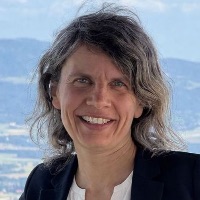
Iwona Grobelna (Senior Member, IEEE) is an accomplished researcher and academic in the field of computer science and automation. She received her M.Sc. and Ph.D. degrees in Computer Science from the University of Zielona Góra, Poland, in 2007 and 2012, respectively, and was awarded the habilitation degree in Automation, Electronics, Electrical Engineering, and Space Technologies in 2024, reflecting her significant scientific achievements and research independence. She is currently an Associate Professor at the Institute of Automatic Control, Electronics and Electrical Engineering at the University of Zielona Góra, where she is actively involved in both research and teaching. She has authored three scientific books and co-authored over 80 peer-reviewed publications in international journals and conference proceedings, contributing extensively to the advancement of her field. Her research focuses on the design, formal specification, and verification of automation and control systems, with particular emphasis on model checking techniques, which enable rigorous analysis of system correctness, reliability, and safety. Her work combines strong theoretical foundations with practical applications, supporting the development of dependable and efficient control systems used in modern engineering environments.
Dr Agustín Castillo-Martinez
Universidad de Jaén
Dr. Agustín Castillo-Martinez is a Doctor of Engineering and Assistant Professor at the University of Jaén, specializing in the history and engineering of construction. His research focuses on the intersection of historical analysis, heritage preservation, and civil engineering, with particular emphasis on public works, transportation systems, and coastal infrastructure. He is an expert in industrial archaeology and the study of industrial heritage, combining rigorous historical research with practical engineering insights. His work also covers urban planning and the history of technology, exploring how past engineering practices inform contemporary infrastructure and preservation strategies. Dr. Castillo-Martinez integrates graphical representation and construction engineering techniques to document, analyze, and preserve the legacy of public and industrial works, contributing to both academic knowledge and practical approaches to heritage conservation.
mgr Jakub Sawczuk
AGH University of Krakow
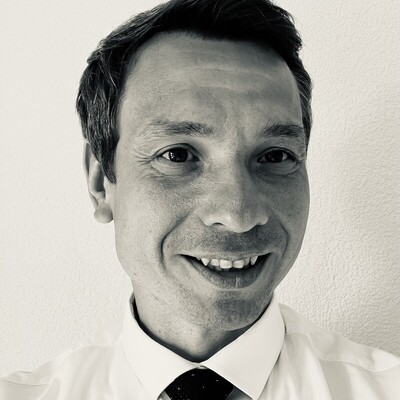
A passionate analyst and a mathematician by conviction, he brings over eight years of experience at the intersection of mathematics, data science, and business analytics, focusing on transforming complex data structures into scientifically grounded, actionable insights. His work is driven by the belief that meaningful analysis goes far beyond dashboarding, requiring rigorous mathematical modelling and a deep understanding of underlying processes. His primary research and professional interests include data strategy and architecture, particularly the design of modern data warehouse solutions based on Delta Lake paradigms using platforms such as Databricks, Azure Synapse, and PySpark; advanced analytics, with emphasis on predictive modelling, forecasting, and anomaly detection supported by deep learning methods and statistical validation; as well as the systematic identification and optimisation of processes through data-driven approaches. He also operates across the full data stack, from data integration and semantic modelling using SQL and Python to the development of advanced analytical reporting systems. With a strong academic foundation in mathematics and data science (M.Sc.), he combines theoretical rigor with a practical, implementation-oriented approach, and is currently pursuing a PhD in an external (extramural) mode. His goal is to leverage formal and analytical methods to convert data into robust, scientifically grounded decision-making frameworks and sustainable competitive advantage.
(mgr) inż. AGH Student
AGH University of Krakow
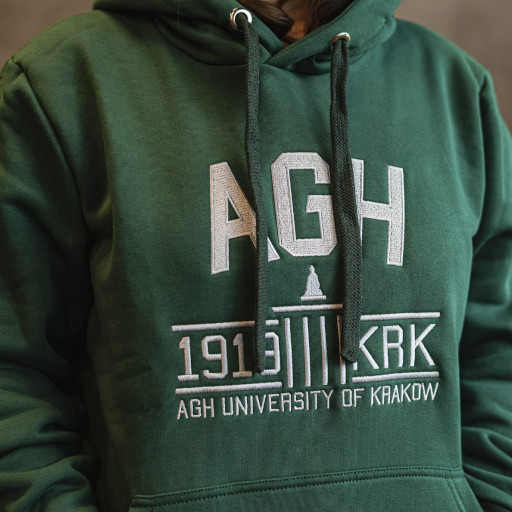
Well, it’s you, dear student! If you are reading this and find the topics explored by our team engaging, chances are there is nothing standing in the way of you joining us in scientific collaboration. The research group, led by Prof. Szpyrka, offers a unique environment where theoretical foundations meet practical applications across four complementary areas: modelling, exploration, optimisation, and workflows. Our work ranges from building mathematically rigorous models of real-world systems – using formalisms such as Petri nets, finite automata, and specialised languages – to advanced data exploration in large, heterogeneous datasets, including relational and graph databases, blockchain, and spatial, text, and image data analysis with machine learning and modern AI techniques. We also focus on optimisation of processes, algorithms, and models, as well as on designing coherent workflows that integrate modelling, data analysis, and decision-making into reproducible and automated research pipelines. By joining the team, you will have the opportunity not only to contribute to cutting-edge research at the intersection of formal methods and artificial intelligence, but also to develop your own academic path with our support – we are happy to supervise bachelor’s and master’s theses, as well as doctoral research, whether within a doctoral school or through an external (extramural) PhD track.